01 / MATERIAL NOTES
Styling with Natural Materials
Natural materials bring more than a color palette to a room. Grain, weave and small irregularities give simple spaces depth. The most convincing combinations do not try to make everything look the same; they allow each surface its own character.
Choose a Starting Point
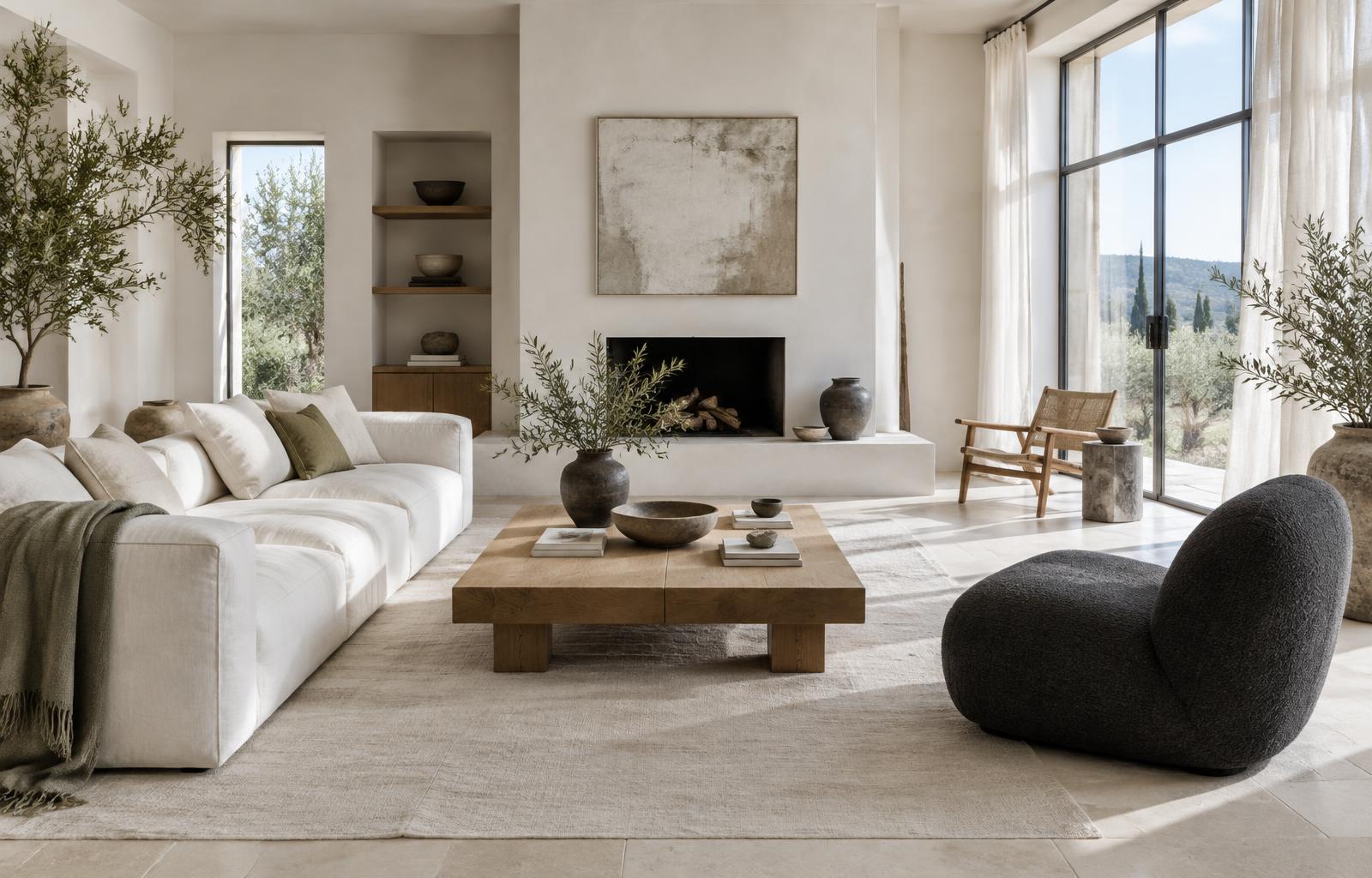
Begin with a material already present in the room. An oak floor might suggest a linen sofa and a stone side table; a pale tiled floor might welcome a darker wooden chair. Work with the architecture before adding accessories. This keeps the room connected rather than assembled from unrelated moments.
Vary the Scale of Texture
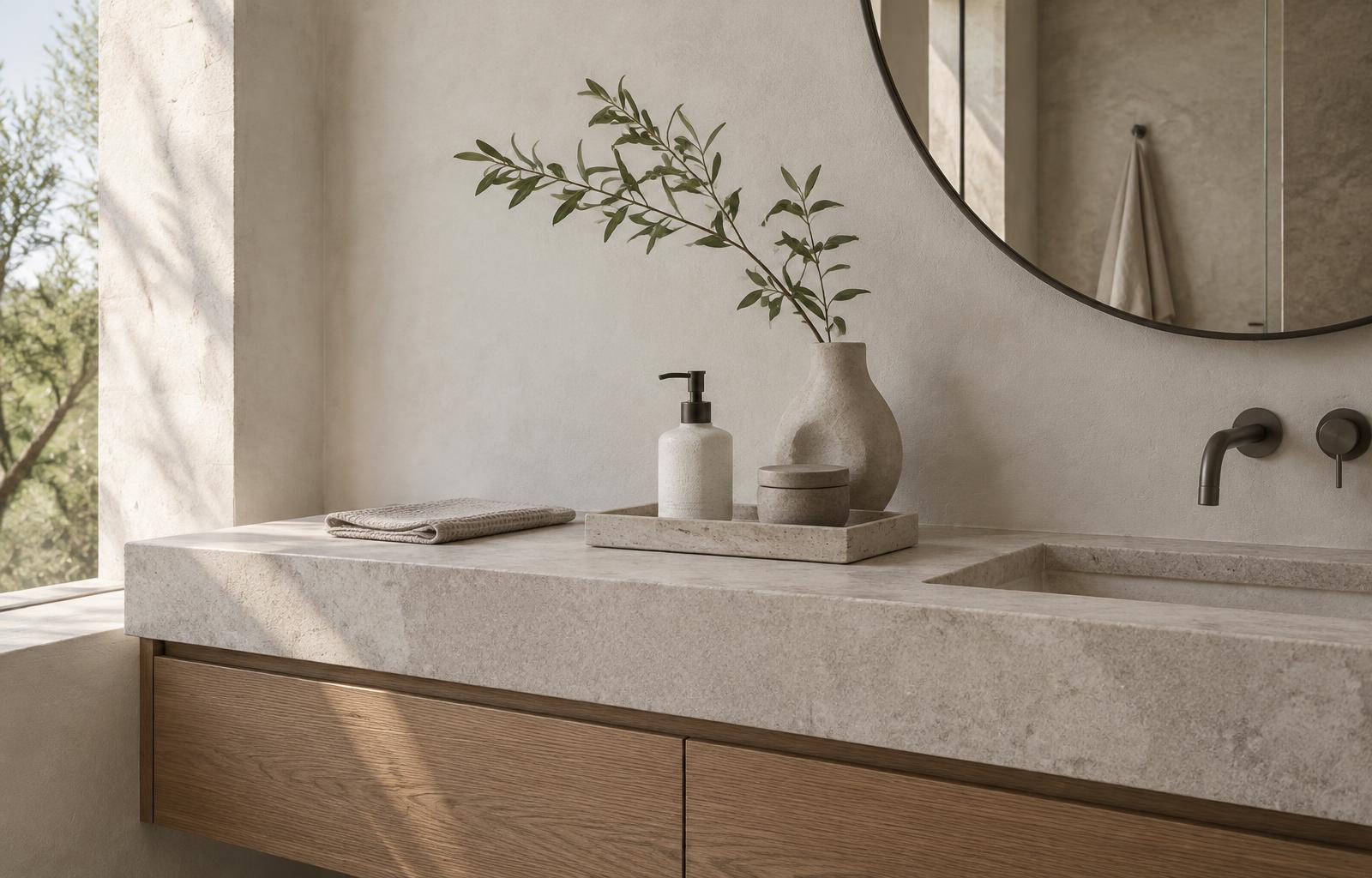
Combine a broad, quiet surface with smaller, more expressive textures. A plain plaster wall gives a woven shade or an irregular ceramic bowl room to stand out. If every surface is equally textured, the eye has nowhere to rest. One or two tactile details can be more effective than a shelf full of them.
Use Contrast, Not Perfect Matches
Light linen beside charcoal ceramics, or warm wood against pale stone, creates definition without adding a busy pattern. Compare materials in daylight and notice their undertones. They do not need to match exactly, but a shared warmth or a deliberate contrast helps them belong together.
Edit, Then Live with It
Arrange a small group of useful objects and leave some of the surface empty. Move through the room for a few days before adding more. A considered interior is not a finished display: it is a space that leaves room for books, conversation and the ordinary things you enjoy.
Explore the Home Edit